
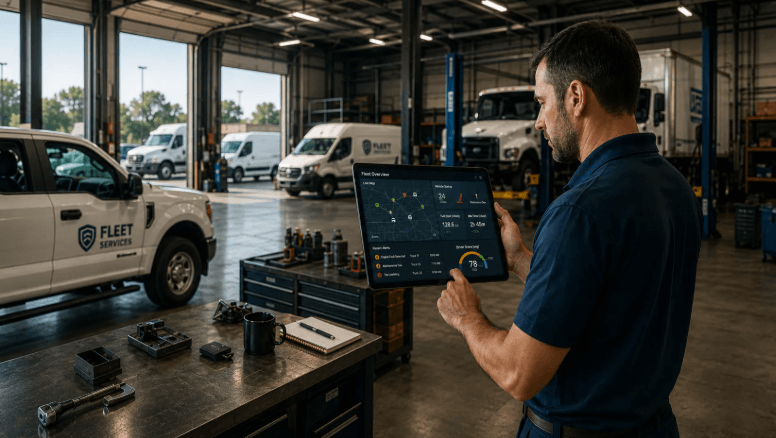

Public agencies depend on their vehicles to deliver essential services, protect communities, and respond to emergencies. From fire engines and rescue trucks to police vehicles, ambulances, and public works equipment, every vehicle must remain safe, reliable, and ready for duty. However, maintaining these fleets involves more than scheduling repairs or replacing worn parts. We also need accurate inspection records that help us understand the actual condition of every vehicle before it enters service.
Fire apparatus presents a particularly important challenge because these vehicles often carry expensive equipment, operate under demanding conditions, and must be ready to respond at a moment’s notice. Despite their importance, maintenance information can become scattered across paper forms, handwritten notes, spreadsheets, and disconnected reporting systems. This creates a gap between the physical condition of a vehicle and the information available to fleet managers.
Implementing daily apparatus checks through a consistent, documented process helps close that gap. By making inspections easier to complete, standardizing defect reporting, and improving access to maintenance information, public agencies can strengthen operational readiness and make more informed fleet management decisions.
Why Fire Apparatus Requires Consistent Daily Inspections
Fire engines and other emergency response vehicles experience operating conditions that differ significantly from those of ordinary passenger vehicles. They may remain stationary for extended periods, travel at high speeds during emergency responses, carry heavy equipment, and operate in congested streets or difficult weather conditions. Each of these circumstances can affect vehicle performance and increase the importance of routine inspections.
A fire apparatus may appear ready from the outside while containing an issue that is not immediately visible. A damaged hose connection, an electrical warning, a low fluid level, a malfunctioning warning light, or a problem with a braking component can affect the vehicle’s ability to perform its intended duties. Regular inspections provide an opportunity to identify these concerns before they interfere with operations.
We should treat vehicle readiness as an ongoing responsibility rather than a task performed only when a problem becomes obvious. A structured inspection routine encourages crews to examine relevant vehicle systems, verify essential equipment, and communicate defects before the apparatus is assigned to an emergency.
The exact inspection requirements should reflect the vehicle type, manufacturer recommendations, applicable regulations, and departmental procedures. When agencies establish clear expectations, personnel can follow a repeatable process instead of relying on memory or individual preferences.
The Hidden Cost of Paper-Based Vehicle Inspection Records
Paper inspection forms may appear inexpensive because they require little initial investment. However, their long-term administrative and operational costs can be difficult to recognize. A form must be completed, collected, reviewed, stored, and retrieved whenever someone needs to confirm a vehicle’s inspection history. Across a large municipal fleet, these tasks can consume considerable staff time.
The problem becomes more serious when inspection records contain incomplete answers, illegible handwriting, missing signatures, or vague descriptions of mechanical problems. A note stating that a vehicle has an issue with its engine provides limited value unless it identifies the symptoms, circumstances, and relevant warning indicators.
Paper records can also become separated from repair orders or maintenance histories. When supervisors cannot easily connect an inspection finding with the action taken afterward, they may struggle to determine whether a reported issue has been resolved. The same defect might be reported repeatedly without a clear record of its status.
During shift changes, these weaknesses can create communication gaps. An outgoing crew may identify a problem, but the incoming crew may not receive the information promptly. Without a reliable handover process, personnel could make assumptions about a vehicle’s readiness.
Digital inspection systems address these challenges by organizing inspection results in a consistent format. When supported by appropriate workflows, they can record completion times, associate reports with specific vehicles, and make reported defects available to authorized supervisors and maintenance personnel.
How Digital Daily Apparatus Checks Improve Fleet Visibility
A digital inspection process gives agencies a more organized way to monitor the condition of their vehicles. Rather than searching through folders or waiting for paper reports to reach the maintenance office, supervisors can access recorded inspection information through a centralized system.
Well-designed daily apparatus checks can guide personnel through vehicle-specific inspection items and help ensure that important steps are not overlooked. Depending on the system configuration, inspection forms may include required fields, condition selections, defect descriptions, photographs, and electronic acknowledgments.
This structured approach improves consistency across shifts, stations, and vehicle types. Supervisors can compare inspection results more easily because personnel are following the same basic reporting process.
Digital records also improve the visibility of unresolved problems. When a crew identifies a defect, the report can be routed to the appropriate personnel according to departmental procedures. Maintenance teams can review the details, determine the next action, and document progress until the issue has been addressed.
The value extends beyond the individual inspection. Over time, organized records can help agencies identify recurring problems, evaluate maintenance patterns, and recognize vehicles that require additional attention.
Fire Apparatus Compared With Ordinary Municipal Fleets
Municipal fleets often include a wide range of vehicles, including administrative cars, utility trucks, sanitation vehicles, road maintenance equipment, and emergency response apparatus. Although all these assets require appropriate inspections, their operational priorities and consequences of failure can differ considerably.
A routine administrative vehicle may be taken out of service and replaced with another car when a mechanical issue develops. A fire engine assigned to a busy station may have fewer practical substitutes available, particularly when other apparatus are already responding to emergencies or undergoing maintenance.
Emergency vehicles also contain specialized systems that require attention beyond ordinary roadworthiness checks. Depending on the apparatus, these may include emergency lighting, warning devices, pumps, generators, water tanks, hoses, ladders, and other mission-specific equipment.
Consequently, agencies should avoid applying an identical checklist to every vehicle without considering its function. A fleet-wide inspection program should provide consistent reporting standards while allowing inspection requirements to reflect each asset’s design and operational responsibilities.
Digital fleet management supports this balance by organizing different inspection templates within one management framework. Fleet managers can establish appropriate requirements for fire apparatus, ambulances, police vehicles, and general municipal vehicles while retaining a consistent method for documenting defects and follow-up actions.
Building a Reliable Daily Apparatus Inspection Checklist
An effective inspection checklist should be comprehensive enough to address important safety and operational requirements without becoming unnecessarily complicated. If forms are too long, confusing, or repetitive, personnel may find them difficult to complete consistently during busy shifts.
A practical checklist generally covers several important areas.
1. Exterior Condition and Visible Damage
Personnel should examine the vehicle’s exterior for visible damage, leaks, loose components, damaged mirrors, tire concerns, and other conditions that could affect safe operation. Any unusual finding should be documented clearly enough for maintenance personnel to understand the concern.
2. Tires, Brakes, and Steering
Tires should be checked according to established departmental procedures, including appropriate attention to visible damage, inflation requirements, and unusual wear. Brake and steering concerns should be reported promptly and evaluated by qualified personnel.
3. Lights and Emergency Warning Systems
Emergency apparatus relies on appropriate lighting and warning equipment to support safe operations. Inspections should address the systems specified by the department’s procedures and manufacturer guidance, including relevant headlights, brake lights, warning lights, and audible warning devices.
4. Engine Compartment and Fluid Levels
Where included in the approved inspection procedure, personnel should check relevant fluid levels, visible leaks, belts, hoses, and warning indicators. Any unusual condition should be reported rather than dismissed because the vehicle appears to start normally.
5. Specialized Emergency Equipment
Fire apparatus may require checks of pumps, hoses, ladders, generators, communications equipment, and other equipment carried for emergency response. The checklist should reflect the apparatus configuration and the department’s applicable operating procedures.
6. Cab Safety and Documentation
Seat belts, mirrors, dashboard warnings, required documents, and other cab-related items should receive attention according to the vehicle’s inspection requirements.
7. Defect Reporting and Vehicle Readiness
The final stage should record any identified problems and communicate their operational significance. Personnel should follow departmental procedures for determining whether a vehicle can remain in service, requires restrictions, or must be removed from service pending qualified evaluation.
A checklist is useful only when its findings lead to appropriate action. Agencies should therefore connect inspection completion with clear reporting, escalation, and maintenance procedures.
How Digital Inspection Records Strengthen Accountability
Accurate inspection documentation helps establish what was checked, when the inspection occurred, and what issues were reported. This information supports accountability by creating a more consistent record of routine fleet activities.
When inspections are recorded digitally, agencies may be able to use timestamps, user identification, electronic acknowledgments, and associated defect reports to improve traceability. The precise capabilities depend on the software and its configuration, but the objective remains the same: make inspection information easier to verify and manage.
This becomes particularly important when a vehicle develops a mechanical problem after an inspection or when management needs to review the sequence of events surrounding a maintenance issue.
Complete records can help investigators and supervisors understand which concerns were reported and how the agency responded. However, digital documentation alone does not establish that a vehicle was mechanically safe or that every inspection was performed correctly. The quality of the process still depends on personnel following established procedures and supervisors ensuring that defects receive appropriate attention.
Agencies should also establish suitable access controls, retention policies, and review procedures so inspection information remains protected, available to authorized personnel, and useful for operational decision-making.
Using Inspection Data to Improve Preventive Maintenance
Preventive maintenance becomes more effective when it is supported by reliable information about actual vehicle conditions. Scheduled maintenance remains important, but inspection reports can reveal developing problems between planned service intervals.
For example, repeated reports of unusual tire wear may indicate a need for further investigation. Recurring fluid leaks could suggest that an earlier repair requires additional attention. Repeated electrical warnings may also justify a closer technical assessment.
When fleet managers can examine these patterns across multiple inspections, they have a stronger foundation for deciding which vehicles need attention first. They can also compare reported defects with work orders and service histories to determine whether recurring problems have been resolved.
Digital systems can support this process by bringing inspection findings into a more organized record. Depending on the available reporting features, agencies may review outstanding defects, identify common failure categories, monitor repair progress, and assess how frequently particular vehicles require maintenance.
These insights can help maintenance teams plan workloads, prioritize resources, and reduce avoidable administrative delays. Nevertheless, inspection data should complement professional mechanical assessments and manufacturer-recommended service schedules rather than replace them.
Managing Vehicle Defects Before They Affect Emergency Response
Identifying a problem is only the first step in maintaining fleet readiness. Agencies also need a reliable process for deciding what happens after an inspection identifies a defect.
A minor cosmetic issue may require documentation and scheduled attention, while a safety-critical mechanical concern may require immediate escalation. The distinction should be based on established departmental rules and qualified assessment, not on an individual crew member’s assumption that the vehicle will probably remain operational.
An effective defect management process identifies who receives the report, who evaluates the issue, how maintenance work is authorized, and how the vehicle’s operational status is communicated. It should also establish how repairs are documented and how the vehicle is cleared for service when appropriate.
Digital reporting can make these steps easier to coordinate. Supervisors may review incoming reports, maintenance staff can assess reported problems, and authorized personnel can track progress without relying entirely on verbal updates or disconnected paperwork.
When an issue remains unresolved, the record should clearly communicate its status to the people responsible for assigning and operating vehicles. This reduces the risk of important information being overlooked during shift changes or routine scheduling decisions.
Measuring the Performance of a Fleet Inspection Program
Municipal agencies should evaluate inspection programs using meaningful operational measures rather than focusing only on the number of completed forms.
Useful indicators may include inspection completion rates, the number of unresolved defects, average time between defect reporting and initial review, repair turnaround times, and the frequency of recurring mechanical problems. Agencies can also examine whether vehicles are consistently receiving the required inspections before being assigned to service.
These measures help supervisors identify weaknesses in the process. For example, a high completion rate may appear positive, but it provides limited reassurance if reported defects remain unresolved for extended periods. Similarly, a reduction in reported defects could reflect better vehicle condition, but it could also indicate incomplete reporting.
The results should therefore be interpreted alongside maintenance records, operational experience, and direct reviews of inspection quality.
Digital records make this analysis more manageable by organizing information in a consistent format. With appropriate reporting capabilities, agencies can compare performance over time and identify where additional training, process changes, or maintenance resources may be necessary.
See also: Artificial Intelligence in Restaurant Kitchens
Choosing Vehicle Inspection Software for Public Agencies
Selecting suitable software requires agencies to evaluate their operational needs, fleet structure, reporting requirements, and existing maintenance procedures.
The most useful solution should make inspections straightforward for personnel while providing supervisors with sufficient information to manage vehicle readiness. Agencies should assess whether the system supports vehicle-specific checklists, clear defect reporting, centralized records, accessible maintenance histories, and appropriate notifications.
Mobile accessibility may also be important for personnel completing inspections at stations, garages, depots, or other locations. A practical system should fit the way crews work rather than introduce unnecessary administrative steps.
Before selecting a platform, agencies should consider user permissions, record retention, reporting options, system integration, data security, training requirements, and the availability of technical support. They should also verify whether the software supports their specific apparatus inspection and maintenance workflows.
For agencies seeking to modernize their procedures, daily apparatus checks can be explored as part of a broader approach to digital vehicle inspection management. Evaluating the available features against departmental requirements helps determine whether a solution is suitable for the fleet’s operational needs.
Training Personnel to Complete Better Vehicle Inspections
Even the most advanced inspection software cannot compensate for inadequate training or unclear responsibilities. Personnel must understand which items require examination, how to identify potential problems, and how to document their findings accurately.
Training should explain the purpose of each inspection step and provide examples of useful defect descriptions. Instead of recording a vague statement such as “vehicle problem,” personnel should describe the observed symptom, relevant warning indicator, location of the issue, and circumstances in which it appeared, where appropriate.
Departments should also establish consistent procedures for reporting urgent defects and communicating vehicle status. Supervisors need to know how to review inspection records, identify incomplete reports, and ensure that maintenance concerns receive appropriate follow-up.
Refresher training and periodic checklist reviews can help maintain consistency as vehicles, equipment, and operational requirements change. Feedback from drivers, apparatus operators, and maintenance personnel can also reveal whether a checklist needs clarification or improvement.
A successful inspection program combines practical training, clear accountability, usable technology, and a strong commitment to vehicle safety.
Conclusion
Fire apparatus and municipal vehicles represent significant investments in public safety and essential community services. Keeping these assets ready requires more than purchasing reliable vehicles or following a fixed maintenance schedule. Agencies also need dependable information about vehicle condition, inspection completion, reported defects, and repair progress.
Paper-based processes can make this information difficult to organize, retrieve, and share. A well-managed digital inspection system offers a more consistent way to document findings, improve communication between shifts, and give fleet managers greater visibility into unresolved maintenance concerns.
By implementing structured daily apparatus checks, training personnel to report defects accurately, and connecting inspection findings with appropriate maintenance procedures, public agencies can strengthen accountability and support more informed operational decisions.
Ultimately, the goal is not simply to complete more inspection forms. It is to ensure that important vehicle problems are identified, communicated, evaluated, and resolved through a dependable process that supports safe and reliable fleet operations.


